Estonia builds up Moldova’s defence against virtual attacks

Estonia was the first country to experience a large-scale Russian cyberattack. Now, with support from the Estonian Centre for International Development (ESTDEV), it is passing on the lessons it has learned.
Written by: Marian Männi
In 2007, Russia launched the first (known) cyberattack against another country, disabling Estonian institutions for three weeks. This attack on Estonian government offices, newspapers, banks, and private companies was the "first true cyber war" the world had ever seen.
Alarmed by the scale of the attack, has built one of the most advanced cybersecurity infrastructures in the world. Estonia is an outspoken proponent of cybersecurity, hosting NATO's Cyber Defence Centre and providing leadership on cyber defence to countries worldwide.
In many ways, Moldova is following a similar path and facing similar issues. So, who better to assist than Estonia?
Digitalisation brings new threats
The Moldovan government has been bringing its services online, in a wish to become more competitive and efficient, explained Sergiu Rabii, one of the key figures in Moldova's IT and digitalisation efforts. Digitalisation is at full speed. Digitalisation, however, makes the government more vulnerable to virtual attacks.
Every recent major event in the region has brought cyber threats to Moldova. When Russia launched its full-scale invasion of Ukraine three years ago, a cyberattack attempted to topple Moldova's digital infrastructure at the same time.
"There is always an external threat trying to interfere and disrupt Moldova," said Dumitru Topolovan, a Moldovan cyber defence educator.
Ahead of Moldova's 2024 presidential elections and European Union referendum, a cyber operation targeted the country, attempting to scare people into voting against the EU. Attackers with links to Russia created fake domains resembling Moldovan government websites. Letters containing fake news circulated, with outrageous claims, such as "at least 30% of employees in every organisation must be migrants," or that "new mosques will be built in every region of the country" should Moldova join the EU.
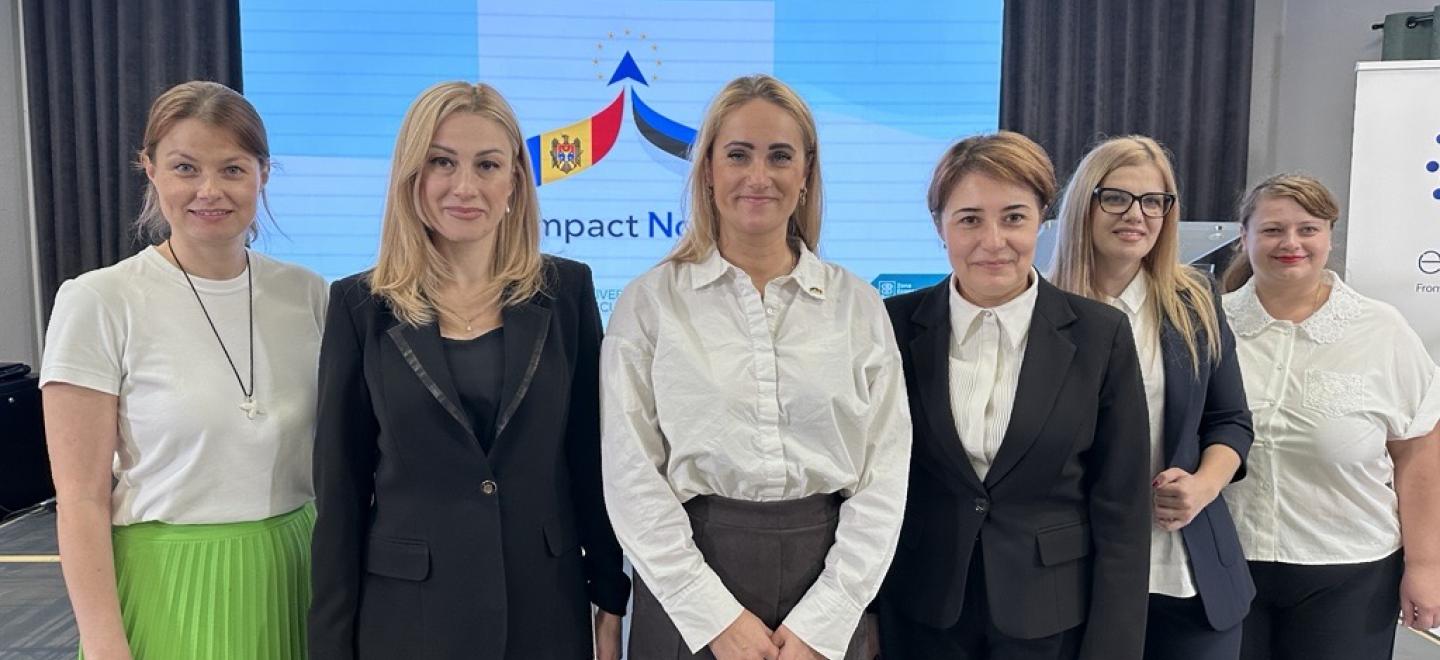
The attack made it clear that Moldova urgently needed to improve its cyber defence. In partnership with Tallinn University of Technology and ESTDEV, the country opened the National Institute of Innovations in Cybersecurity, “Cybercor”, last year.
Real-world training sessions
"Estonia is helping us train students studying cybersecurity," explained Marius Dumitrașcu, managing director of Codwer and an instructor at Cybercor. "Our Estonian colleagues bring realistic scenarios, pushing students to think outside the box."
With its expertise in digital resilience, cybersecurity education, and secure e-governance, Estonia provides real-world, battle-tested strategies.
With support from ESTDEV and in collaboration with Tallinn University of Technology, Moldovan students have taken cyber defence courses in Estonia, and Estonian experts have organised webinars and tabletop exercises for Moldova's Technical University students.
Krister Kalda, one of the Estonian mentors, was impressed by what he saw in Moldova: "The students in Moldova are just as capable as those in Estonia." He believes that Estonia can help Moldova navigate the initial challenges of building a robust cyber defence system.
Students also found the training invaluable.
"I enjoyed the interaction and the organisation of the event," said Daniel Miron, a third-year cybersecurity student at the Technical University of Moldova. He attended a cyber attack simulation. "It was one of the best experiences!" he added. In his opinion, Moldova has everything in place to succeed now. “We just need to educate people to prevent them from falling victim to attacks.”
And that’s what Estonian experts are particularly skilled in. After the 2007 cyber attack, one of the most important steps taken, according to Andres Ääremaa, ESTDEV’s Programme Manager for Digital Transformation, was launching a Master’s Program in cyber defence at Tallinn University of Technology (TalTech). “Today, we are sharing that experience with Moldova,” Ääremaa said. “The creation of Cybercor and the training of young people is more than just Estonia’s technical support - it is a partnership for a forward-looking and secure digital state!"
And the training continues this summer and autumn. “When we were in a similar situation, we were supported. Now it’s our turn to help friends out,” said Anu Baum, project manager at TalTech.

Related articles