Moldova to follow the Estonian model for matching jobseekers with jobs
First Ukraine, now Moldova. Estonian experts are trying to fix two job markets with the same tool: data.
Authors: Marian Männi and Iurie Gandrabura
Jasmin Delev is exactly the kind of person Moldova's National Employment Agency (ANOFM) exists to help. She's 23, she came home this summer with an audiovisual design degree from the Netherlands, and she's been looking for work. She has never once considered registering.
Instead she freelances, piecing together video and design projects, some months earning well, others earning nothing. “I didn't spend four years studying art and design in a liberal European country with a rich cultural scene just to come back to Moldova and do social media for a trucking company,” she said, and quickly added: “There is nothing wrong with those jobs, but I want work that actually uses my creative and intellectual skills.” She didn’t think the state could help her.
Delev is not an exception.
Very few Moldovans turn to the state for help finding work. In the second quarter of 2026, 67,600 people were officially unemployed, a rate of 7.3 percent, according to Moldova’s National Bureau of Statistics. Yet only 6,208 people had registered with ANOFM at the start of July, agency figures show.
“The statistics made us think that something was not quite right,” said Aet Trei, Estonia’s expert consultant on employment services.
In a country where nearly half of the population has left in the past 30 years, every third company was short of staff in 2023, according to a survey by ANOFM. It found around 11,000 vacancies employers could not fill that year. The need to bring jobseekers closer to employers was clear.
To find out how to bridge the gap between jobseekers and employers, Estonian experts, with funding from the Estonian Centre for International Development (ESTDEV), came to support and train Moldova’s employment experts this year. Two years earlier, they had run a similar programme to reform the State Employment Service of Ukraine.
“The answer lies in data and digitalisation,” said Trei, who led the six-month training programme for ANOFM employees. Around 15 Estonian experts led eight training days on performance management, digital systems and counselling. “Our message was that everything you want to change, you must measure. For this you have to use smart digital and AI tools.” The jobseekers and employers are the clients, she emphasised, and their needs should be at the centre.
But in Moldova, many databases are still built on old-fashioned Excel files with incoherent data.
“The employment agency’s consultants should be the experts who understand what is happening across the fields and regions,” Trei said. “They should be able to visualise the data to support jobseekers and employers.”
In Estonia, a publicly available dashboard was created for this purpose.
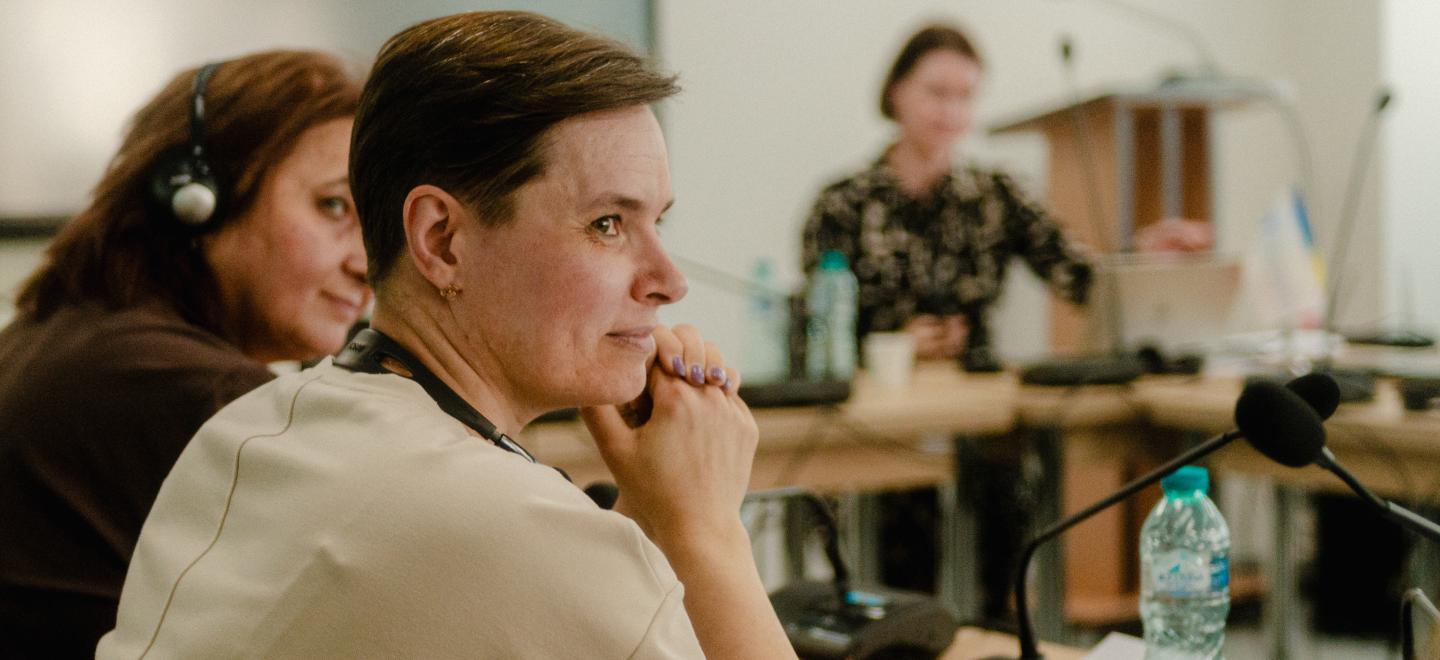
Estonia has gone through a similar shift, turning its employment service into a broader partner for jobseekers, explained Aet Trei, project manager at the Estonian Unemployment Insurance Fund. Photo: Iurie Gandrabura
“I entered a laboratory in Estonia”
A visit to the Estonian Unemployment Insurance Fund was part of the programme, and when Vadim Ceban, head of IT at ANOFM, walked into the career guidance centre, his first thought was that he had entered a laboratory. He saw firsthand how digital tools help people test their skills and explore possible careers, and how technology takes over routine work so counsellors could focus more on people.
“Digitalisation does not mean simply installing software,” Ceban said. “It means changing the mindset, simplifying internal processes and continuously training staff.”
Some of that thinking is now written into Moldovan policy. In July 2026, Parliament passed amendments aligned with EU rules to the employment law. Now registered jobseekers are allowed to keep their unemployment benefit for up to three months while searching for work in an EU country, a change that takes effect this autumn.
Ceban said ideas from the Estonian training sessions were also written directly into ANOFM's technical specifications for its new digital system. “Simply moving a bureaucratic process onto a screen does not help,” he said. “First it has to be redesigned and simplified, and only then automated.”
For Ceban, the goal is not to replace counsellors but to free them from routine work. In Estonia, he said, “the system works instead of people” on many repetitive tasks, leaving staff more time to talk to clients and guide them.
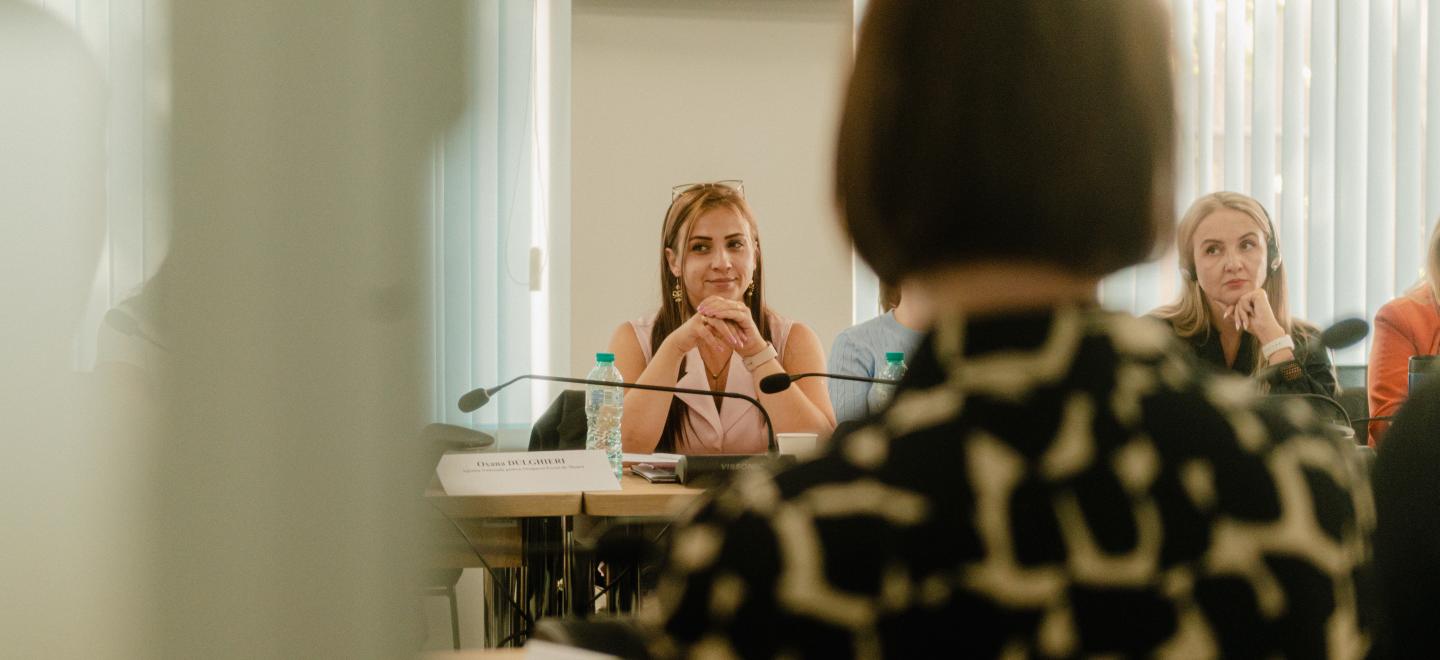
Participants during the final Estonia-Moldova training session in Chișinău. Photo: Iurie Gandrabura
Estonia once faced a similar problem. Its employment service is only about 25 years old and has gone through repeated reforms. Trei recalled that even the word unemployment once carried a stigma and people were not used to turning to the service for help. Over time, the institution became a partner for finding a first job, changing careers or returning to work.
Karolin Kõrreveski, the head of International Relations at the Estonian Unemployment Insurance Fund, described a work ability reform in Estonia that stopped looking only at a person’s disability and asked instead what that individual could still do.
“One person with vision loss can achieve certain things at work; another with the same diagnosis can do something different,” she said. “We took this individual approach.”
Trei is careful not to present Estonia as a finished model. “Moldova should not copy Estonia one to one,” she said. Estonia itself is now asking whether its own employment service tried to do too much, running programmes “for everyone” instead of focusing on those who need the most support, a mistake she hopes Moldova can skip.
For Estonia, Moldova is also a test of whether lessons from its own relatively recent reforms can be adapted to a country preparing for EU membership.
Moldova is now trying to adapt that experience while rebuilding the systems behind it: matching jobseekers to jobs according to their actual skills, helping young people choose what to study based on what employers need and giving employers a faster way to find the right person.
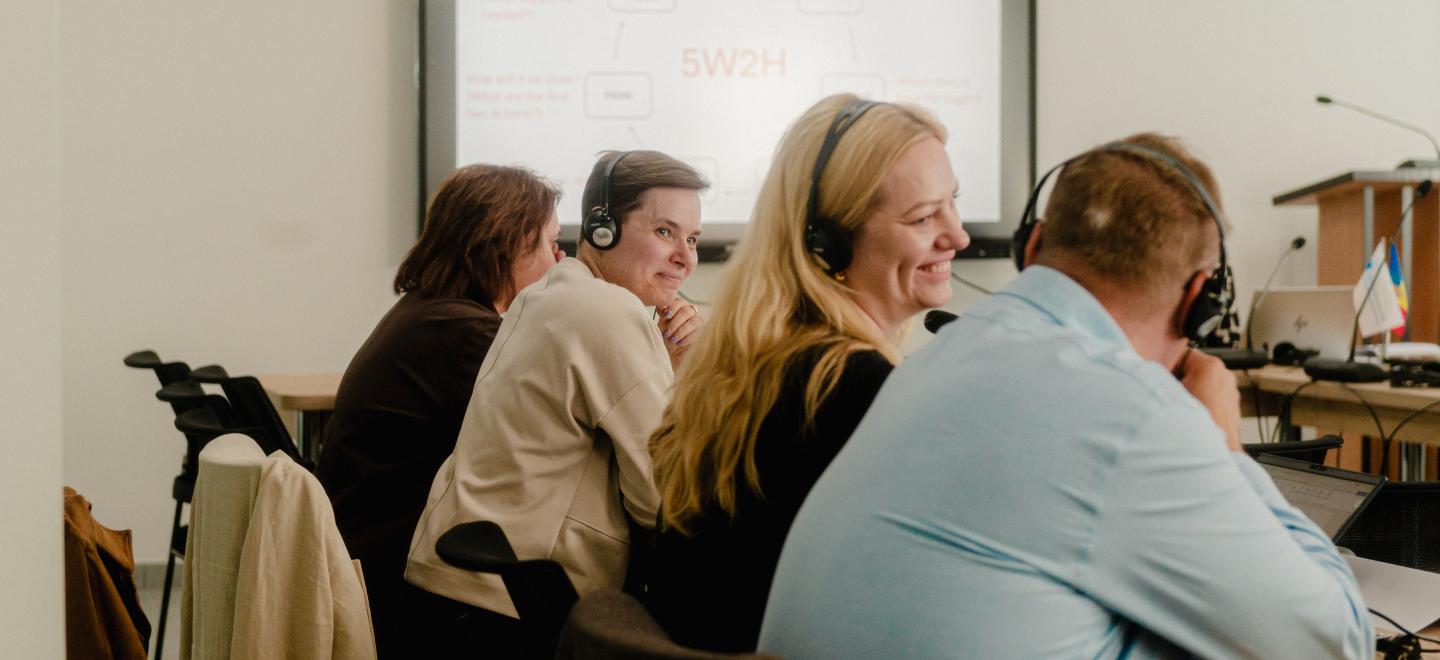
Some of the new thinking is now written into Moldovan policy. Photo: Iurie Gandrabura
Learning from Estonia on the way to the EU
The programme fits into Moldova’s preparations for EU accession. The project framework explicitly links the work to Chapter 19 of the EU acquis on social policy and employment: a modern employment service is expected not only to register unemployment, but to help people enter and remain in the labour market.
For Trei, digitalisation is also about the jobseeker's own experience with the state. “If the state has already asked me for information in one place,” she said, “why should I have to provide it again somewhere else from scratch?” It's a small frustration, but one that shapes whether people bother engaging with public institutions at all.

The General Employment Directorate in Chișinău, where the final training session took place. Photo: Iurie Gandrabura
Making the service easier to approach
Some lessons are already moving into Moldova’s new system. ANOFM wants to regularly ask jobseekers and employers whether its services actually help them, test the system with at least 50 local staff in 2027 and automate it by 2028.
“We need to find time for the citizens, to listen and to think creatively about the most suitable solution for that person,” said Raisa Dogaru, director of ANOFM. That takes more than better software. It takes more staff: ANOFM has 245 employees, compared with more than 900 in Estonia despite its smaller population. People facing disability, long-term unemployment or the shame of losing a job often need time with a counsellor, not just a digital form.
“We have to listen to every person who comes to us,” Dogaru said.
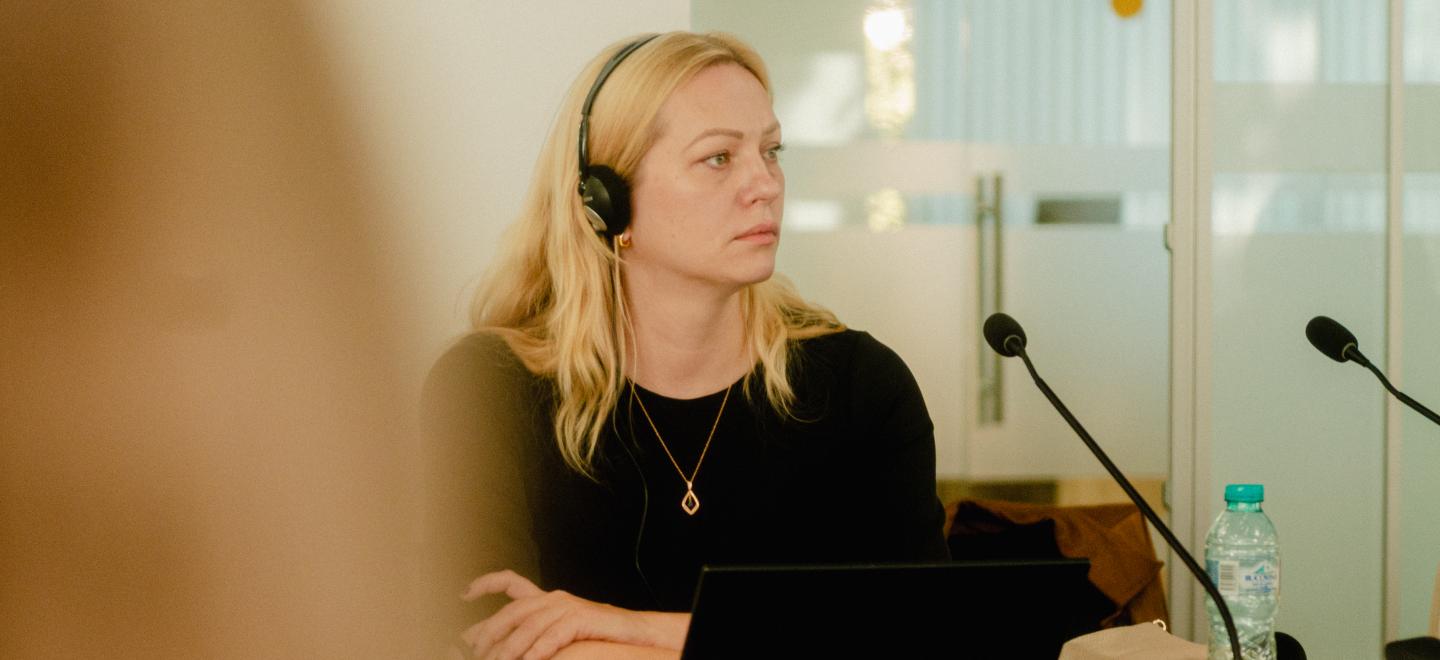
Karolin Kõrreveski, head of International Relations at the Estonian Unemployment Insurance Fund, mentioned that any change should start with an individual approach. Photo: Iurie Gandrabura
Trei said she hopes Moldovans will increasingly see ANOFM “as a partner”, a place to discuss a first job, a career change or what to do after becoming unemployed.
All Articles