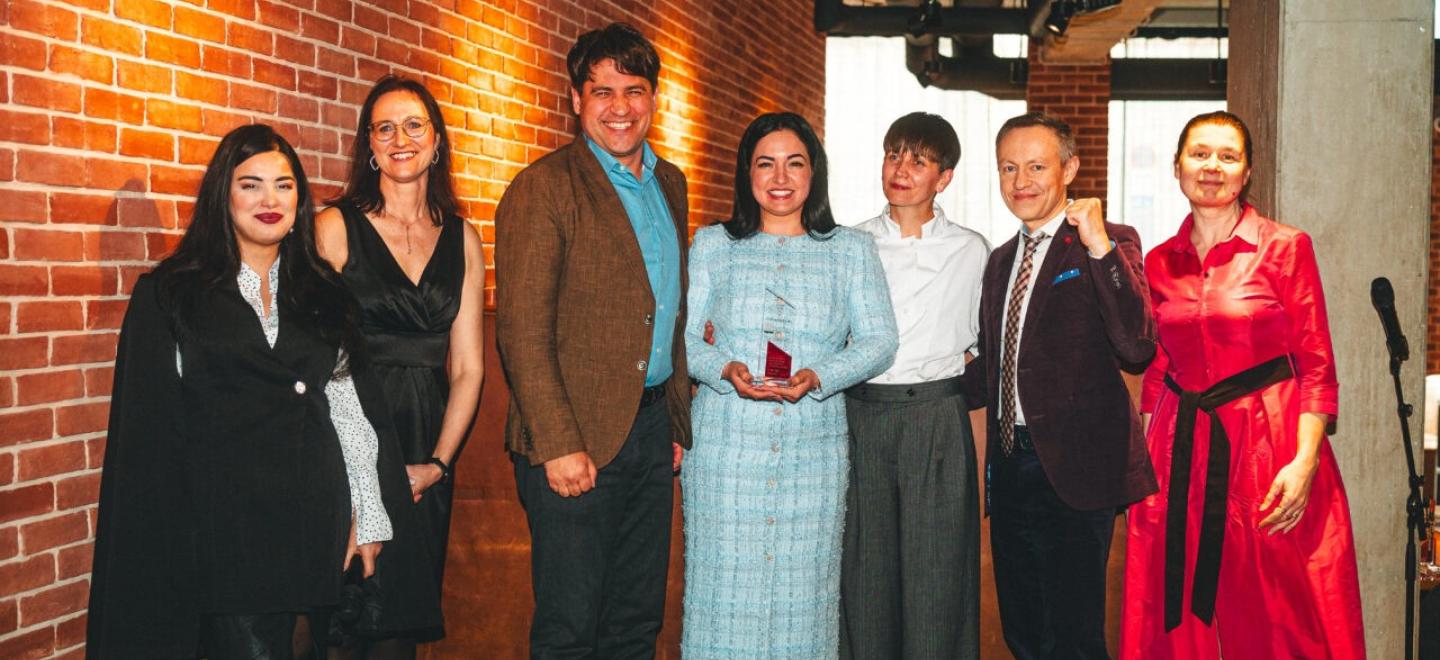
Armenian companies see doors open to new markets after Estonian export training

Summary
First Estonian export training program for small and medium-sized enterprises completed in Armenia
Initiative aims to increase the number of exporting companies and strengthen the national economy
Program draws on Estonia’s experience and is adapted to Armenia’s needs
Armenia's small and medium-sized enterprises (SMEs) face a challenge familiar to many small countries: how to find a path to international markets. An Estonian initiative prepares Armenian entrepreneurs to build export-ready companies.
A cooperative project between the Estonian Centre for International Development (ESTDEV) and the Visionest Institute, “Export Trainings in Armenia,” concluded in December 2025. It aimed to increase the export capacity of Armenian SMEs by supporting their systematic entry into international markets.
“This is a very important moment for Armenian companies. Many businesses are increasingly looking toward European and other Western markets, which means export skills are becoming a strategic issue for the entire economy. When entrepreneurs have a clear export strategy, they can make this shift much more confidently and quickly,” said Anu-Mall Naarits, Visionest Institute’s CEO. “The direction of the economy changes when the mindset of entrepreneurs changes.”
The initiative brought together Armenian entrepreneurs with Estonian mentors and experts, teaching businesses to think strategically: selecting the right target markets, understanding cultural and regulatory barriers in global markets and developing realistic export plans.
During the three-month programme, 47 local companies developed structured export plans based on their strengths, competitive advantages and market opportunities.
“This was one of the most practical and impactful programmes for Armenian companies. We gained practical tools, real case studies and action plans that we can immediately apply when expanding internationally,” said Lilit Azatyan, the CEO of Pogos Software.
The programme's structure was based on previous success stories from Georgia and Ukraine but adapted to Armenia's local needs.
Developing practical tools and encouraging professional growth
Many of the programme participants had been operating in the local market for years, but even if they already exported their products abroad, their export models needed updating.
Noyland, a producer of dried fruits and snacks, is one such company. Founded in 2017, Noyland had already begun exporting to foreign markets (Canada and Russia) before joining the programme, but its export model faced several challenges.
“Before joining the programme, we mainly considered entering new markets through distributors. This created many difficulties, from proper pricing and logistics to certification issues and how distributors presented and promoted our brand,” said Sirush Tiratsvyan, a Noyland representative.
Under the new export strategy developed during the programme, the company plans to test new markets through online marketplaces and small-scale sales. As a result, Noyland has decided to focus on entering the Scandinavian market, where it sees demand for healthy, natural snacks.
A positive impact on Armenian businesses and the economy
SMEs play a crucial role in Armenia's economy, accounting for more than 99% of all active companies.
Armenia has set an ambitious goal to make exports the main driver of economic growth between 2025 and 2030. While 272 exporting companies operated in the country in 2023, the government aims to increase this number to 440 by 2030, according to its export development strategy.
Despite this goal, many Armenian companies face the challenge of expanding beyond local markets and finding a sustainable path to international markets due to its small domestic market and regional constraints.
“This three-month journey has been both challenging and rewarding. The training strengthened my skills in business development, export identification, evaluation, and management. The knowledge gained can be applied directly to real marketing and business challenges,” said Anna Grigoryan, the founder of AG Partner and co-founder of 2SWEET.
A strategic contribution to Armenia's future
The export training programme is a strategic investment in the resilience and growth potential of Armenia's economy. The programme helps develop entrepreneurs' practical skills and confidence in international markets, thereby increasing the competitiveness of SMEs and creating conditions for export growth and the development of new international business networks.
“Every new skill represents not only professional growth but also responsibility, to create broader opportunities for Armenian businesses and bring our cultural values to the global stage,” said Hasmik Movsesyan, the founder of HASIS.
In the long term, this project supports the diversification of Armenia's economy, the creation of new jobs and stronger integration into international value chains. These goals also align with Estonia's development cooperation focus – strengthening the business environment of partner countries and supporting sustainable economic growth.
“Armenia is a small country in a region of significant geopolitical tension. Economic independence is particularly important. Strengthening export capacity helps Armenia reduce dependence on individual markets and improve its economic resilience. Estonia has much to offer in this context. We have gone through a similar journey ourselves, from a small export-dependent economy to a competitive international player,” said Margus Gering, ESTDEV’s regional head for Europe. “By supporting Armenian entrepreneurs, we invest in a shared future. A stronger, Western-oriented Armenia means a more stable region and new cooperation opportunities for Estonian companies.”
Photo: Visionest / Simonyan Hakob
Related articles