Estonian-led modular housing project in Ukraine boosts Estonia–Japan business ties

Estonia and Japan have joined forces to provide housing for internally displaced persons in Ukraine, deepening business ties between construction companies in both countries and delivering Ukraine’s first three-storey modular timber-frame building.
The project combines the expertise of Estonia's largest wooden module manufacturer, Harmet OÜ, and one of Japan's largest façade material producers, the NICHIHA Corporation, to construct Ukraine's first three-storey, modular wooden building. It is jointly funded by the Estonian Centre for International Development (ESTDEV) and the Japan International Cooperation Agency (JICA).
At the end of last week, JICA and NICHIHA organised a construction seminar at the Harmet factory, where construction of the wooden modules for the apartment building has already begun. The seminar brought together wooden module manufacturers from Estonia and elsewhere in Europe and used the IDP housing project in Ukraine to demonstrate how Japanese façade materials can be used in the construction of modular apartment buildings with wooden frames.
"Harmet sees an excellent opportunity to cooperate with the Japanese company NICHIHA in the reconstruction of Ukraine and in the implementation of other potential projects. The first pilot project in Brusyliv has progressed smoothly. Hopefully, our cooperation will help open new markets for other Estonian companies, as well, and export Estonian skills and know-how around the world," said Alo Tamm, Harmet’s chief executive officer.
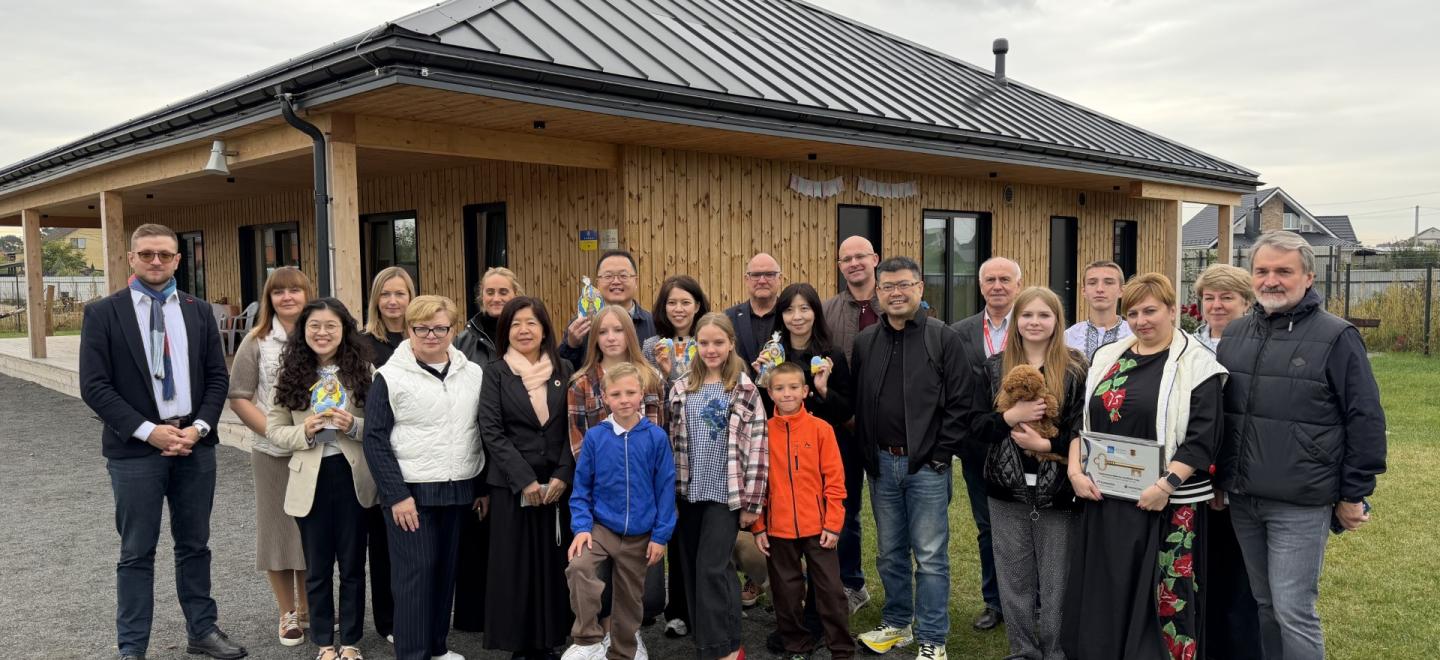
This 18-unit apartment building will provide permanent housing for IDPs in Brusyliv, Ukraine. The building will meet European Union energy efficiency standards, follow passive house principles and use solar energy.
Ensuring safe, stable housing for IDPs is of long-term strategic importance for Ukraine's reconstruction. Wooden modular construction technology, which has become increasingly popular in Estonia, has the potential to streamline the process. It enables rapid construction of high-quality, energy-efficient housing while also encouraging Ukraine’s construction sector to adopt sustainable solutions.
"For the Brusyliv project, we have expanded our network of partners, creating added value for Ukraine's reconstruction process and involving a like-minded partner in the form of JICA. It is important that the cooperation is not limited to this single project. It has already opened up concrete cooperation opportunities between the Estonian company Harmet and the Japanese company NICHIHA, and in the long term, it creates the conditions for strengthening business ties between Estonian and Japanese companies to support Ukraine jointly with practical solutions," said Margus Gering, ESTDEV’s regional head for Europe and Cooperation and Development in Ukraine.
Japan has expressed interest in continuing cooperation with ESTDEV to support Ukraine's recovery. In August 2025, ESTDEV and JICA signed a cooperation agreement at the Ukraine Business Forum in Tokyo to construct additional apartment buildings for IDPs in the Zhytomyr Region.
Related articles